

Claim Scrubber: What It Catches and What Slips Through
August 25, 2026
What DME Suppliers Should Know About AI in Billing and Coding
September 14, 2026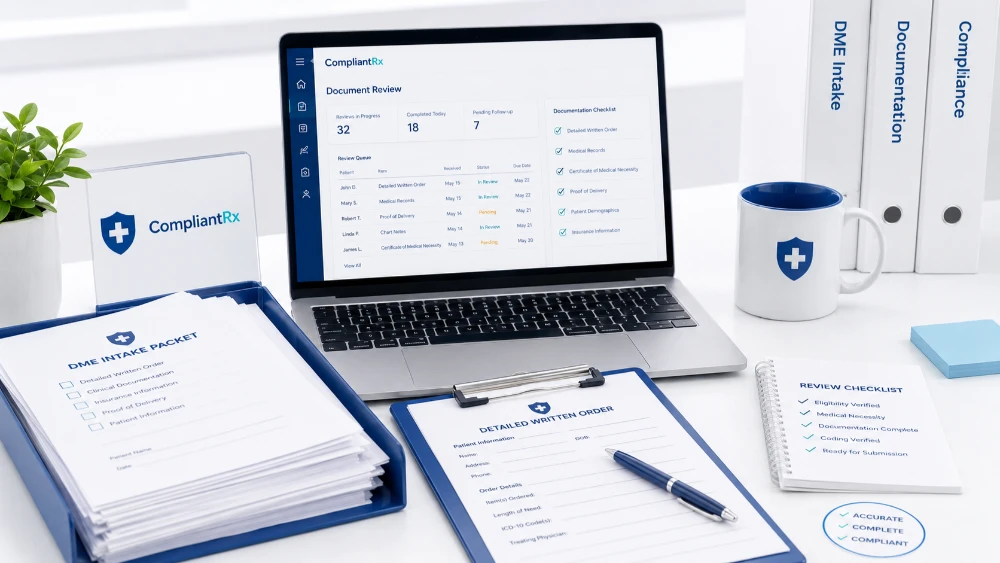
Most billing audit checklists read the same way. Generic steps, no context for how DME claims actually move through your system. If you run intake for a mid-market DME supplier, you already know the real risk is not one big mistake. It is small, repeated gaps that pile up quietly until a payer flags them.
This checklist walks through the areas that matter most for DME claims, in the order they actually happen.
Why A Medical Billing Audit Checklist Matters Now
Payer review activity has been increasing. CMS’s CERT data found a DMEPOS improper payment rate of 21.4 percent, with the large majority of those improper payments coming from documentation failures, not clinical issues. CMS-1828-F, effective January 6, 2026, also expanded post-payment review sampling.
That combination means more claims are being pulled for review, and the reason is usually paperwork, not medical necessity. A consistent audit checklist is one of the more direct ways to catch those gaps before a payer does.
Confirming Patient And Insurance Information Accuracy
Errors at intake tend to travel through the entire claim. A wrong subscriber ID or an expired coverage date will not always trigger an immediate rejection, but it often surfaces later as a denial that takes far longer to resolve. Starting the audit here keeps everything downstream cleaner.
Verifying Demographics And Coverage Details
Check that the patient’s name, date of birth, and insurance ID match the record exactly. Confirm the plan is active for the date of service, not just active in general, since coverage gaps are easy to miss when a patient has switched plans recently.
Checking Prior Authorization And Referral Requirements
Some HCPCS codes require prior authorization, and requirements can vary by payer and by product category. Before an order ships, confirm the authorization is on file and matches the equipment being billed.
For a closer look at what documentation payers expect at this stage, see our guide to DME documentation requirements.
Reviewing Coding Accuracy Against Documentation
Coding accuracy is usually where audits find the most issues, largely because it depends on matching two separate records: the clinical note and the billed code.
Matching CPT HCPCS And ICD Codes To Notes
DME claims bill primarily HCPCS Level II codes, not the CPT codes used for physician services, so your audit should focus there. Trace each billed HCPCS code back to the supporting documentation, including the physician’s order and the SWO or LMN on file. If the ICD-10 diagnosis code does not clearly support the equipment billed, that gap needs to be resolved before submission, not after.
Checking Modifier Logic And Bundling Edits
Review modifier usage against current bundling rules. Missing or incorrect modifiers are a common reason claims get flagged even when the underlying documentation is solid.

Catching Duplicate Charges And Missed Billing
Duplicate charges and missed charges tend to hide in different places. Duplicates often show up when the same service is billed under more than one date or provider by mistake. Missed charges usually come from incomplete order entry, where a line item never made it into the system at all.
Run a report that flags same-patient, same-date claims for manual review, and reconcile completed orders against what was actually billed. This step alone often recovers revenue that would otherwise go unnoticed.
Managing Denials And Payment Posting Correctly
A denial is only useful information if your team can act on it consistently. Without a structured process, the same avoidable denial can repeat for months.
Building A Structured Denial Review Process
Sort denials by reason code as they come in, whether that is a documentation gap, a coding issue, or a payer-specific rule. Assign each type to a specific person and track the appeal deadline, since documentation-related denials often have a narrow window to correct and resubmit.
Reconciling Payments Against Contractual Adjustments
Compare what was actually paid against the contracted rate for that payer. Underpayments are easy to miss when they look like routine contractual adjustments rather than errors.
To see recurring denial patterns specific to DME claims, check out our breakdown of common DME claim denials.
Setting A Consistent Audit Schedule That Works
The cadence matters more than the intensity. A checklist run consistently every week catches problems while they are still inside the correction window. The same checklist run once a quarter often finds issues too late to fix.
Start with a manageable slice, such as a weekly sample of recent claims, rather than trying to audit everything at once. Consistency is what makes the process sustainable for a small team.
How CompliantRx Helps You Stay Audit Ready
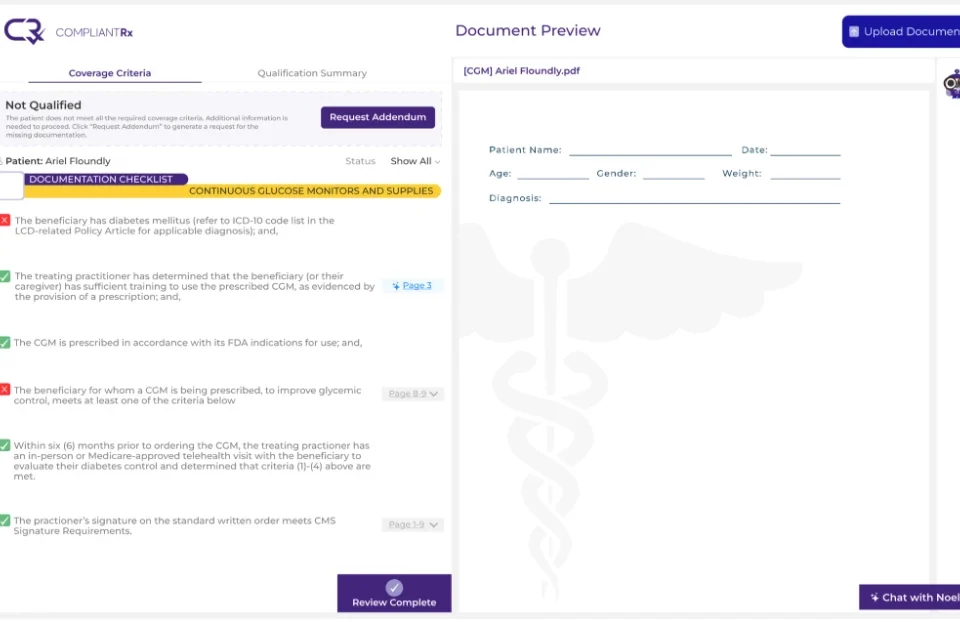
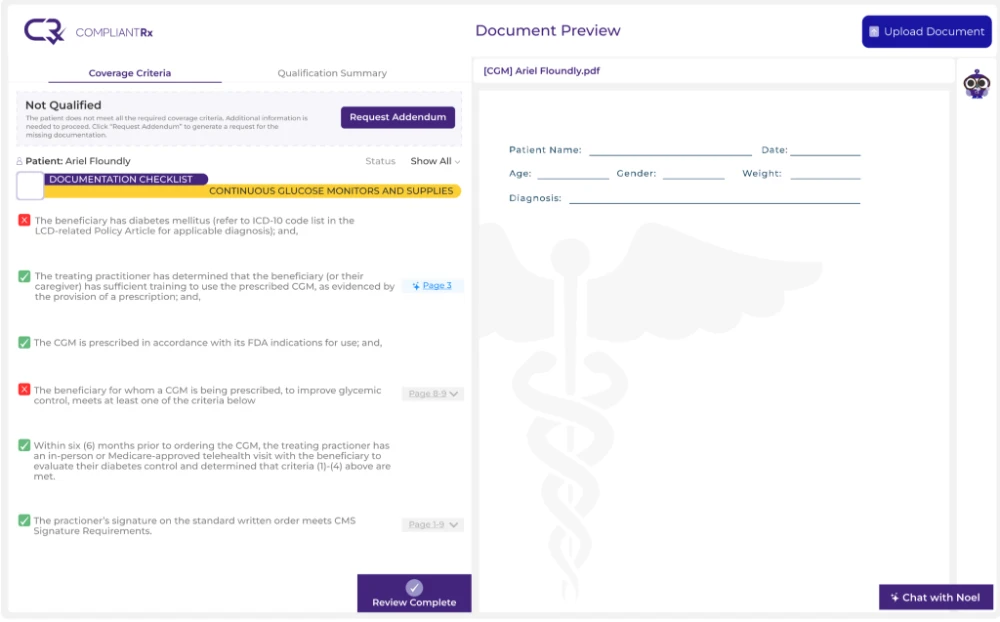
Manual audits catch problems after a claim has already moved through your system. CompliantRx works earlier, at intake, by scanning incoming referral documentation against payer- and product-specific rules before an order ships. When something is missing, it flags the gap and helps generate the corrective addendum, so your audit trail is already complete instead of being reconstructed later.
If your team is spending 20 to 30 minutes per order on manual review, that same check can often be done in 2 to 4 minutes with CompliantRx in place. Schedule a demo to see how it fits into your current workflow.
FAQs
1. How often should a DME supplier run a billing audit?
Weekly spot checks work well for most mid-market teams, with a fuller review monthly.
2. What is the difference between an internal and third-party billing audit?
Internal audits are run by your own staff on a regular cadence. Third-party audits bring an outside reviewer for a less biased, deeper check.
3. What documents should be ready before an audit begins?
Have the SWO or LMN, proof of delivery, prior authorization, and the claim itself pulled together for each sampled order.
4. Can a billing audit checklist prevent a Medicare recoupment demand?
It can help reduce the risk by catching documentation gaps early, though it cannot remove all review risk.
5. Who should own the audit checklist in a small DME team?
Usually the intake or compliance lead, since they are closest to the documentation as it comes in.
6. What happens after an audit finds a coding error?
For a simple error, the claim is corrected and resubmitted. If the error led to an overpayment on a paid claim, the overpayment generally must be reported and returned, typically within 60 days. A pattern of the same error across many claims can trigger a broader review.