

Medical Claims Audit for DME: What to Expect and How to Prepare
August 1, 2026
Understanding The CO-18 Denial Code In DME Claims
August 20, 2026
CO-4 Denial Code: Procedure and Modifier Mismatches in DME
The CO 4 denial code means a procedure code is inconsistent with the modifier used or a required modifier is missing.
In DME, this correctable soft denial stems from equipment-specific modifiers that physician billing never touches. This article explains the definition, DME triggers, and steps to resolve these rejections.
What Does the CO-4 Denial Code Mean?
The official Claim Adjustment Reason Code (CARC) 4 descriptor states: “The procedure code is inconsistent with the modifier used or a required modifier is missing.”
The “CO” prefix designates a contractual obligation, meaning the adjustment requires a provider write-off and cannot be billed to the patient. You will find this code in the Electronic Remittance Advice (ERA) or 835 transaction file under the Claim Payment Information segment or Service Line Information segment within the Claims Adjustment fields.

This is a soft and correctable denial, allowing your billing staff to fix the data discrepancy and resubmit the claim for payment. Unlike CO 50, which denies claims based on a lack of medical necessity, or duplicate denials that reject identical submissions, the CO 4 denial code strictly targets administrative mismatches in coding consistency.
Why CO-4 Hits DME Claims Specifically
DME claims rely heavily on specialized modifiers that dictate billing rules entirely differently from standard physician claims. When your team encounters a CO 4 denial code on a DME claim, it almost always traces back to these equipment-specific indicators creating invalid financial scenarios.
Understanding which modifiers prompt a CO 4 denial code helps your billing staff focus their quality checks on the highest-risk data points.
- NU (New Equipment) / RR (Rental) / UE (Used Equipment): Tells the payer how to price the item. Billing a purchase without NU or UE causes an immediate format mismatch that automated payer systems will reject the claim.
- RT (Right Side) / LT (Left Side): Indicates item laterality. Dropping these on bilateral items makes the quantity and code inconsistent, confusing the payer system regarding the exact nature of the equipment dispensed.
- KX (Requirements Met): Signals compliance with the Local Coverage Determination (LCD) documentation. Omitting KX tells the automated system the strict coverage criteria were not met, invalidating the procedure code entirely.
Common CO-4 Causes in DME (With the Modifiers Involved)
Recognizing the exact scenarios that cause these rejections allows your team to audit claims effectively before submission. The following reference details the specific DME modifiers that frequently generate a CO 4 denial code and the exact administrative triggers behind each mismatch.
| Modifier | Meaning | CO 4 Trigger |
| NU | New Equipment | Billing a purchase item without the NU modifier, preventing the payer from determining the correct pricing structure for a brand-new device. |
| RR | Rental | Submitting a monthly capped rental item without the RR modifier, or mixing it with purchase codes on the same service line, which breaks the recurring billing logic. |
| UE | Used Equipment | Omitting the UE modifier when billing for pre-owned equipment, creating a pricing mismatch for the submitted HCPCS code since used items have different allowable amounts. |
| RT / LT | Right / Left Side (Laterality) | Dropping laterality modifiers on bilateral items like orthotics or braces, causing a quantity and site-of-service mismatch that stops adjudication. |
| KX | Specific Documentation on File | Leaving off the KX modifier when the Local Coverage Determination (LCD) mandates it to prove medical necessity documentation is secured and meets all policy requirements. |
How to Resolve a CO-4 Denial
Because this is a soft, administrative denial, your billing teams can resolve the error and secure payment by following a structured correction workflow.

To fix a CO 4 denial code, you must locate the mismatch on the ERA, verify the right modifier against the HCPCS code and the payer or LCD rules, correct the data, and resubmit the claim.
- Locate the specific HCPCS code line flagged on the 835 ERA file.
- Audit the submitted modifiers against the primary code definitions and the patient billing history, such as checking for ongoing rental versus outright purchase status.
- Cross-reference the claim data with the payer medical policy or Medicare LCD guidelines to ensure all required documentation modifiers are present.
- Correct the claim by adding the missing modifier.
- Resubmit it as a corrected claim.
Because this denial carries the CO prefix, you must never shift the balance to the patient or issue a patient statement for the denied amount.
How to Prevent CO-4 Denials in DME
Stopping a CO 4 denial code requires proactive validation before your billing team even builds the claim. By catching modifier mismatches at intake, you protect your revenue cycle from unnecessary rework and delays.
Implementing a structured prevention workflow is the most reliable way to prevent the CO 4 denial code from reaching the payer:
- Validate at Intake: Verify the dispensing order against product-specific payer rules to ensure the correct modifier strategy is established early in the order fulfillment process.
- Apply Payer-Specific Logic: Cross-reference the HCPCS code with the specific payer LCD guidelines to ensure mandatory modifiers like KX, GA, or RT/LT are accounted for based on the clinical scenario.
- Implement Automated Front-End Scrubs: Set up clearinghouse rules that stop claims if a base DME code is missing its required operational or laterality modifiers.
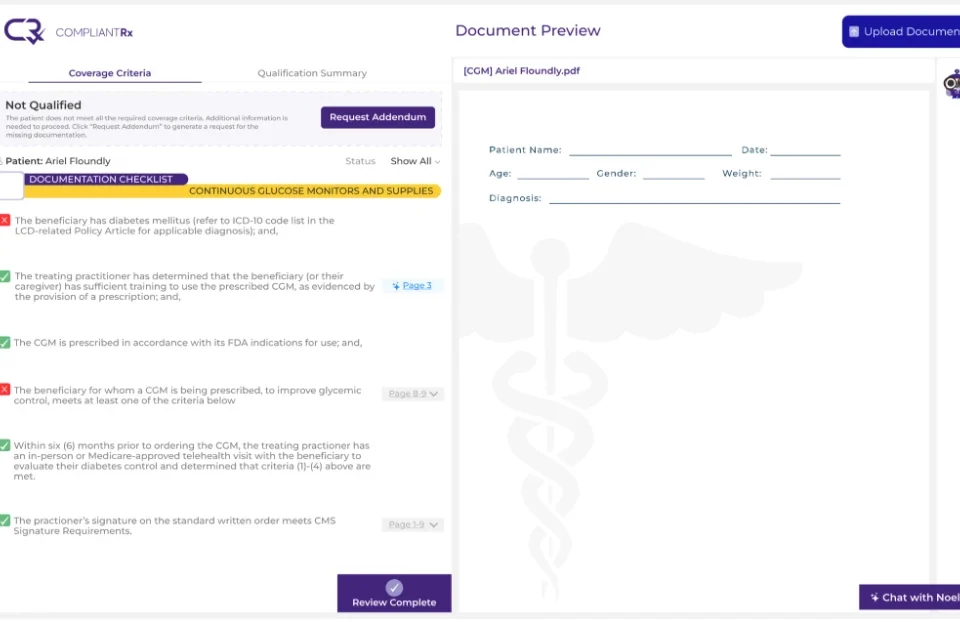
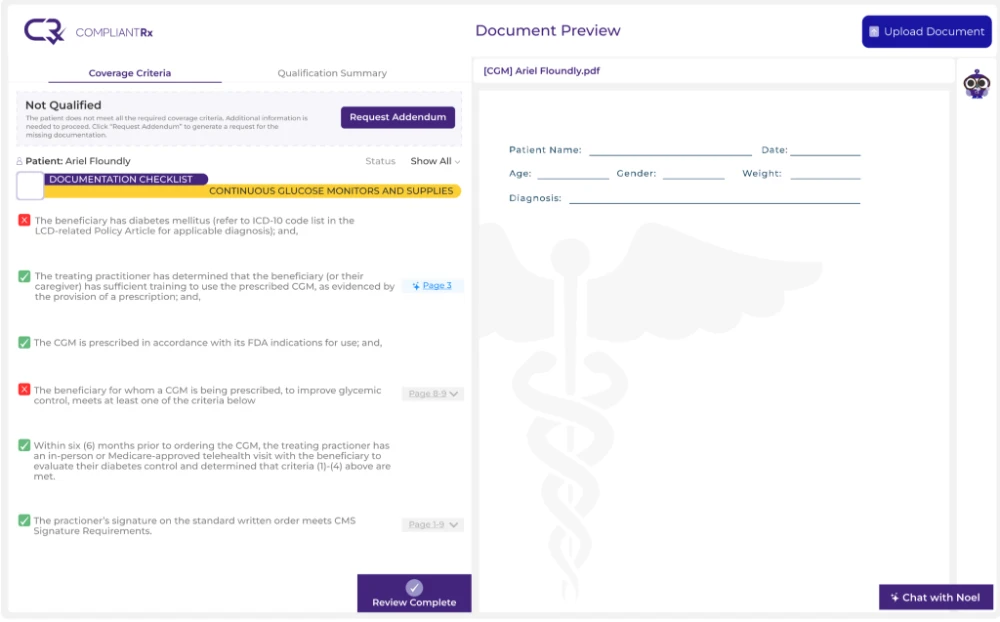
This is where CompliantRx perfectly fits into your workflow. Built specifically by a DME operator who understands these billing friction points, CompliantRx uses AI Medical Record Review and advanced rules-checking to flag coding and modifier gaps against the applicable LCD before submission.
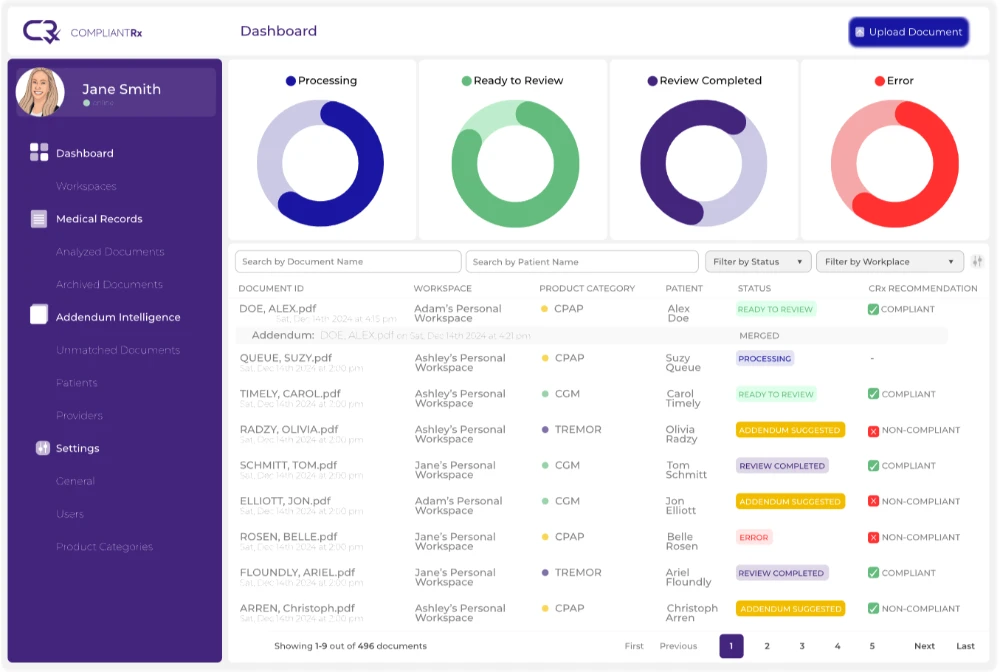
The platform automatically reviews your clinical documentation to ensure you have the required paperwork to back up high-risk modifiers like KX, reducing the manual guesswork that leads to rejections.
Schedule a demo to see how CompliantRx catches modifier and coding gaps before a claim goes out.
FAQs
Here are common questions we receive about the CO 4 denial code and how it impacts DME billing operations.
Q: Is CO-4 the same as CO4 or the CO-4 denial code?
A: Yes, these are simply formatting variants of the standard CARC 4 used across different payer systems and remittance advice documents. They all refer to the exact same procedure and modifier mismatch error.
Q: Can I bill the patient for a CO-4 denial?
A: No, the CO prefix designates a contractual obligation write-off, meaning you must correct the claim and resubmit it rather than billing the patient for the balance.
Q: What is the difference between CO-4 and CO-16?
A: The CO 4 denial code indicates a specific modifier and procedure code mismatch, while CO-16 indicates the claim is missing information needed for adjudication, always paired with a remark code identifying the specific missing element.
Q: Which DME modifiers most often cause CO-4?
A: The modifiers that most frequently trigger this denial include NU/RR/UE for equipment status, RT/LT for laterality, and KX for meeting coverage criteria.