

Building A Medical Billing Audit Checklist That Actually Works
September 1, 2026
CO-29 Denial Code Explained For DME Suppliers
September 15, 2026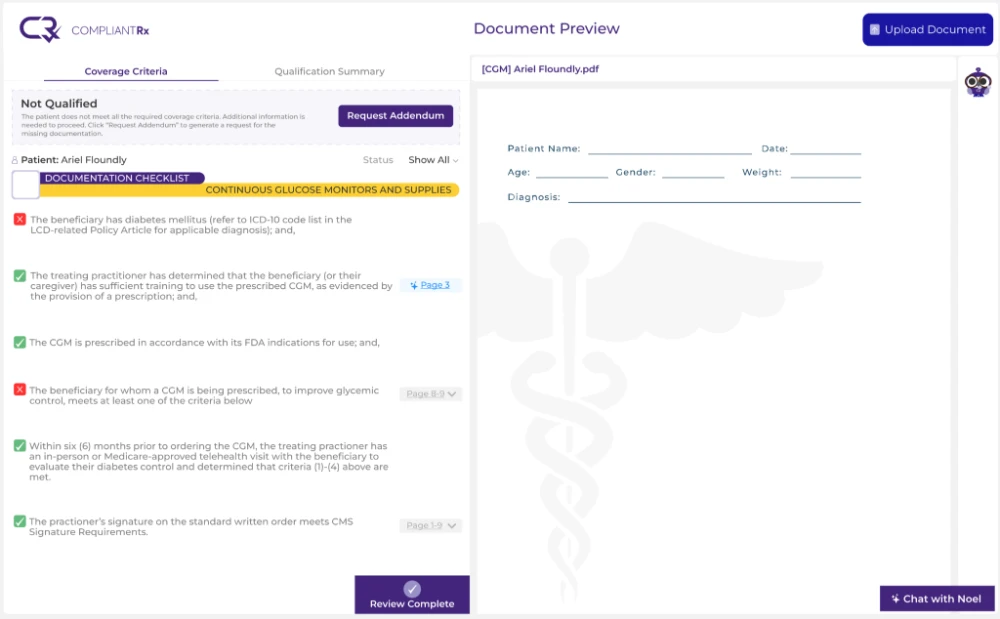
If you work in DME billing or compliance, you have probably wondered how much of your job AI can actually do. Headlines make it sound like coding and billing staff could disappear soon. The real picture is more practical. AI is already changing parts of this work, but it is not replacing the people who understand payer rules and patient context.
Can AI actually replace billing and coding staff
Right now, no. AI tools can read documentation fast and catch obvious errors, but they still struggle with judgment calls. A coder deciding how to handle an unusual case, or a biller explaining a denial to a physician’s office, relies on experience AI does not have.
Most DME suppliers are finding a middle ground instead. AI handles repetitive checks, and staff focus on the cases that need real decision making. That shift is already happening in intake and documentation review, where AI can scan a referral against payer rules before a human ever sees it.
What parts of billing and coding AI already handles well
Some tasks are naturally suited to automation because they follow clear, repeatable rules.
Automated code suggestions from documentation
Many AI tools can scan clinical notes and suggest likely codes based on what is documented. This speeds up the first pass of coding, especially for common product categories. It does not replace a coder’s final review. It gives them a starting point instead of a blank page.
Flagging missing or inconsistent documentation
This is where AI adds the most value today. Before a claim is even submitted, AI can compare a referral or order against a payer’s specific checklist and flag what is missing, such as a signature, a diagnosis code, or a required note.
Automated documentation checks used to catch gaps before claim submission
Catching these gaps early means fewer denials tied to documentation, which is one of the most common and preventable reasons claims get rejected in the first place.
Where AI still falls short in billing and coding
AI is strong with patterns. It is weaker with anything that requires context, reasoning, or up to date judgment.
Complex or ambiguous clinical cases
When documentation is incomplete, conflicting, or unusual, AI tools can misread the situation. A skilled coder can look at the full picture, including a phone call with a provider’s office, and make a judgment call. AI cannot do that reliably yet.
Fast changing payer and compliance rules
Payer policies and LCDs change often, sometimes without much notice. AI systems need to be updated constantly to stay accurate, and even then, someone has to confirm the rule change was applied correctly. This is one reason human oversight stays essential, not optional.
How the coder and biller role is changing
Instead of disappearing, these roles are shifting toward supervision and problem solving.
From manual entry to oversight and review
Rather than entering every field by hand, staff increasingly review what AI has already flagged or extracted. The work becomes checking accuracy and handling exceptions, not repetitive data entry.
New skills that matter more now
Understanding payer rules deeply, communicating clearly with referring providers, and knowing when to question an AI suggestion are becoming more valuable than speed alone. Teams that build these skills tend to adapt fastest.
What this shift means for DME suppliers specifically
DME suppliers face a specific version of this challenge, because so much starts with a fax or referral that may be incomplete from the start.
Why clean intake documentation matters more with AI
AI is only as good as what it is given. If a referral is missing information at intake, no amount of automation downstream fixes that gap. Getting documentation right at the front of the process is what actually reduces denials later.
Want to see how automated intake review fits into this? Learn how AI medical record review works.
Keeping human review in the loop for high risk claims
For complex product lines or unusual cases, human review should stay part of the process. AI can narrow down what needs attention, but the final judgment on high risk claims should still involve a person familiar with that payer and product line.

How CompliantRx supports your team instead of replacing it
CompliantRx was built around this exact balance. It does not assign codes or manage billing. Instead, it works at the intake stage, scanning incoming referrals against payer specific checklists and flagging what is missing before a claim moves forward. That means your team spends less time hunting for gaps by hand and more time on the judgment calls that actually need a person.
If you want to see how this fits into your current workflow, you can schedule a demo with CompliantRx.
FAQs
1. Is AI coding accurate enough to trust?
It is accurate for routine, well documented cases, but still needs human review for anything unusual or high risk.
2. Will AI reduce medical coding jobs long term?
It is more likely to change the role toward oversight and exception handling than eliminate it.
3. Do small DME suppliers need AI tools yet?
It depends on order volume, but even smaller teams benefit from catching documentation gaps earlier.
4. How do I start using AI in my billing workflow?
Start at the intake stage, where AI can flag missing documentation before it becomes a denial later on.