
CO-29 Denial Code Explained For DME Suppliers
September 15, 2026
Prior Authorization Automation: What Works, What Doesn’t, and What It Saves
September 27, 2026
Medical billing automation is software that handles the back end of getting paid. That usually means checking eligibility, scrubbing claims, submitting them electronically, and posting payments.
For DME suppliers, that is valuable work to automate. But there is a catch. Billing automation can only act on the record it is handed. If documentation was incomplete at intake, it produces a tidy claim that still gets denied.
This guide covers what billing automation does well, where it stops, and why the biggest savings sit earlier than most teams automate.
What medical billing automation covers (and does well)
Billing automation earns its place. It takes repetitive back office work off your team and shortens the path to payment.
Most platforms cover tasks like:
- Eligibility verification before delivery
- Claim scrubbing to catch coding and format errors
- Electronic claim submission
- Payment posting
- Denial management workflows
- Recurring and rental billing
DME adds extra complexity through rental billing and payer-specific rules. Tools built to handle recurring claims save real effort there.
The benefits are clear:
- Less manual data entry
- Faster claim submission
- Lower cost to collect per claim
For teams handling thousands of claims, these gains add up. Billing automation is worth having.
Where billing automation stops: the record it’s handed
Billing automation starts once a claim is built. By then, the record is already set.
If a signed order is missing, or the chart does not support medical necessity, automation cannot go back and fix it. It can only work with what it has.
| Billing automation can | Billing automation cannot |
| Scrub a claim for coding and format errors | Gather documentation that was never collected |
| Submit claims electronically | Fix a thin or inconsistent chart |
| Post payments and flag denials | Resolve a gap created at intake |
| Track recurring and rental billing | Get a missing signature from the provider |
This matters because documentation, not billing mechanics, sits behind most improper payments. MedPAC’s June 2026 report put the DMEPOS improper payment rate at 24.2%, nearly four times the overall Medicare fee-for-service rate, and found that insufficient or missing documentation drove 68% of improper payments across Medicare fee-for-service.
An improper payment is not the same as a denial, and it is not a fraud rate. But the pattern is clear. Gaps in documentation are the common thread.
Automating the back end does not touch that root cause.
Where the real savings are: automate intake first
If most problems start at intake, the highest return comes from automating intake first.
Think of a typical order. It arrives by fax. Someone reads it, checks it against payer and product rules, and chases the provider for anything missing. Done by hand, that review can take 20 to 30 minutes per order.
Typical gaps include:
- Missing signatures
- An absent standard written order
- A missing face-to-face encounter note
- Documents that do not match payer rules
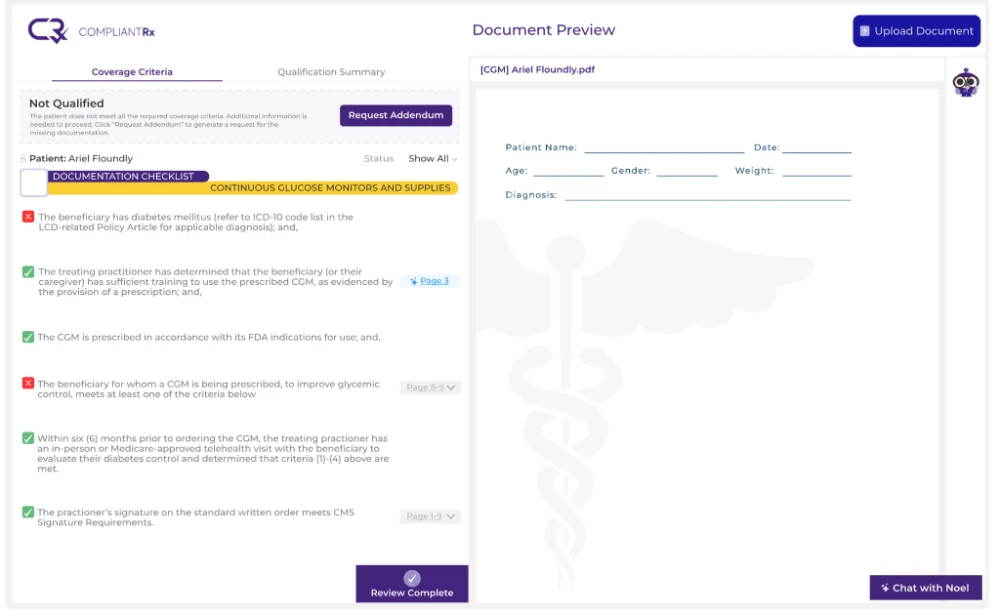
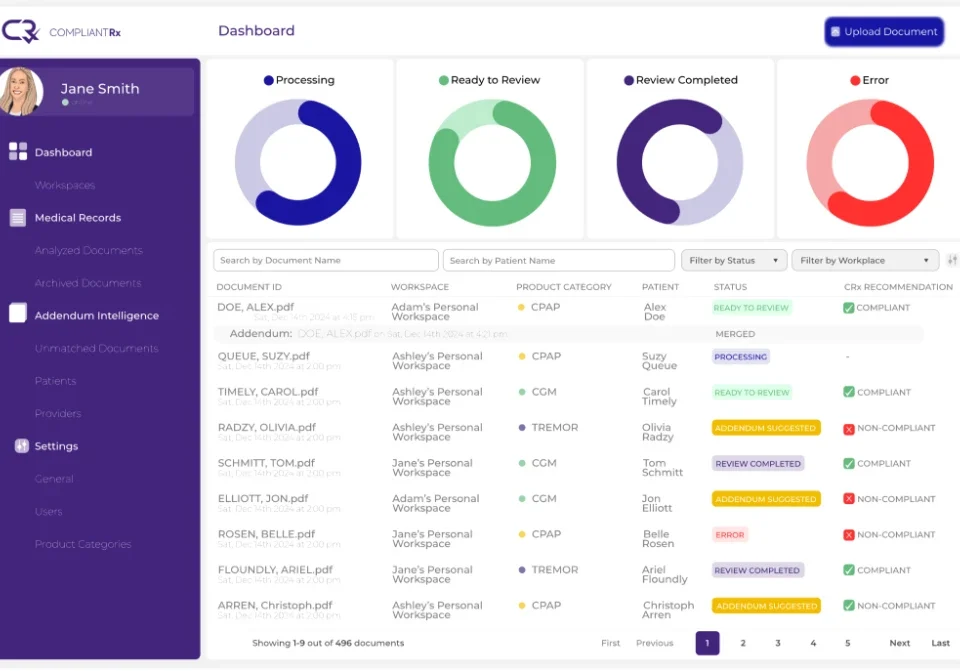
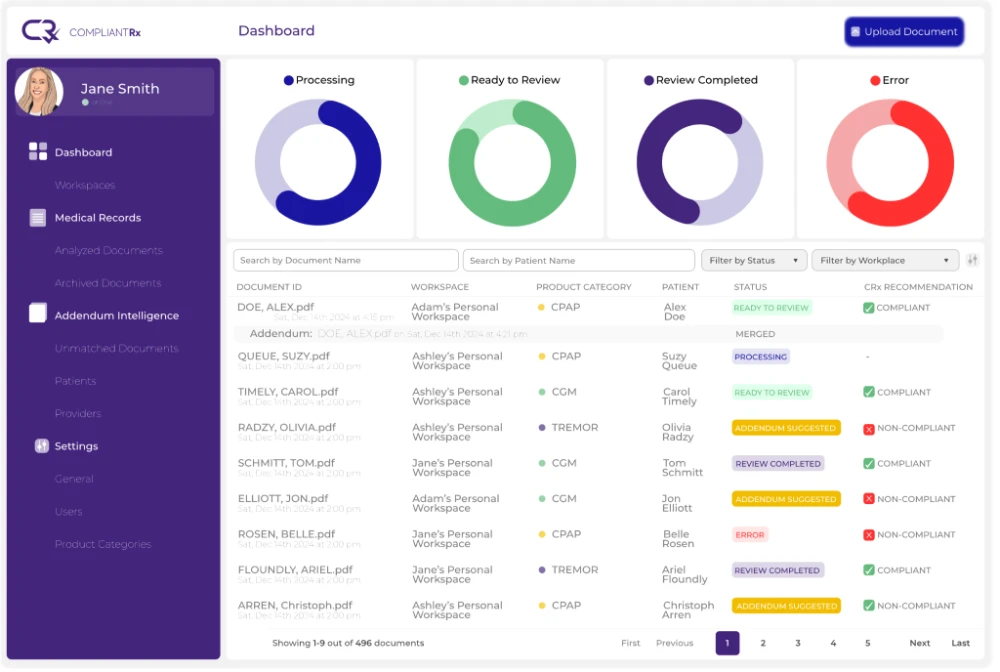
This is where CompliantRx works. It reviews incoming documentation at intake, flags what is missing, and assembles a complete, compliant record. With CompliantRx, that review takes 2 to 4 minutes per order.
Here is how the pieces fit:
- AI Medical Record Review checks documents against payer and product rules
- Intelligent Data Extraction pulls structured data from faxes and referrals
- Addendum Intelligence™ generates corrective language to send back to providers
The finished record goes back to your system of record, such as Brightree or NikoHealth. By the time billing automation runs, it is working from a clean chart. See the integrations CompliantRx supports.
CompliantRx feeds billing automation. It does not replace it, and it is not a billing tool.
Putting the two together
Intake automation and billing automation solve different ends of the same problem.
- Intake makes the record right.
- Billing automation gets it paid.
Suppliers get the most value by automating both. Start with intake, because that is where documentation gaps begin. A clean record also helps billing automation work better, since fewer claims stall on missing paperwork.
For more on building a documentation process that holds up, read our guide to DME compliance.
Schedule a demo to see how CompliantRx gives your billing automation a clean, compliant record to work from.
FAQs
- What does medical billing automation include?
Eligibility checks, claim scrubbing, electronic submission, payment posting, and denial workflows. It covers the back end of getting paid.
- Will billing automation reduce DME denials?
Partly. It catches billing and coding errors, but documentation driven denials start upstream at intake.
- Does billing automation replace billing staff?
No. It supports them. A person still handles exceptions and judgment calls.