


PR-204 Denial Code Description: What It Means for DME Suppliers
July 13, 2026
The CO-119 denial code description indicates that a patient has reached their maximum allowable benefit for a specific service or time period.
In DME billing, this denial reflects strict frequency and quantity limits imposed by payers. Understanding this code helps suppliers manage utilization and prevent avoidable write-offs.
What Does CO-119 Mean?
The CO-119 denial code description means a patient has exhausted their coverage limits for a specific service or timeframe. The prefix CO stands for Contractual Obligation, meaning the denial is based on the agreed-upon contract between the healthcare provider and the insurance company. The provider must write off the adjusted amount and cannot bill the patient for this balance.

Claim Adjustment Reason Code (CARC) 119 officially denotes that the benefit maximum for this time period or occurrence has been reached. Insurers establish these caps based on a dollar amount, visit count, or procedure frequency.
On the 835 Electronic Remittance Advice (ERA), this code appears in the Claim Adjustment segment at the line-item level, paired directly with the procedure code that exceeded the limit. It is frequently accompanied by a Remark Code, such as N435 (exceeds the number or frequency approved within the time period), to clarify exactly which limit was exceeded.
Why CO-119 is Common in DME
In DME billing, CO-119 represents exhausted insurance benefits for a specific item within a set timeframe. It shows up often because DME suppliers have to navigate strict payer rules on equipment replacement and supply limits.
We often see these denials trigger for a few specific operational reasons:
- Strict Frequency Limits: Medicare and private payers enforce strict replacement schedules, known as a Reasonable Useful Lifetime (RUL), for equipment like walkers, wheelchairs, and CPAP machines. Billing for a replacement before the designated period elapses triggers a denial.
- Exhausted Allowances: Insurers cap the amount they pay for disposable supplies, such as incontinence pads or diabetic test strips, per month or year. Once the unit threshold is reached, additional claims trigger this denial.
- Missing or Incorrect Modifiers: Many payers limit rentals but allow exceptions for documented changes in patient condition or irreparable damage. Failing to append required modifiers can cause the claim to be denied as a maximum benefit reached.
- Lack of Prior Authorization: Some equipment requires pre-approval. Submitting a claim without it can result in a coverage-related denial.

CO-119 vs. PR-204
Understanding the CO-119 denial code description requires distinguishing it from other codes like PR-204, as the financial responsibility differs entirely.
- CO-119: Contractual Obligation. The patient has exhausted their coverage limits for a specific service. The provider must write off the balance and cannot bill the patient.
- PR-204: Patient Responsibility. The specific service, equipment, or drug provided is not included in the patient’s current insurance benefit plan. The patient may be billed for the full cost.
For CO-119, verify patient benefit usage or use a medical necessity modifier. For PR-204, appeal if a covered alternative code fits or bill the patient directly.
Resolving and Preventing CO-119
A CO-119 denial has two paths: resolve the one in front of you, then prevent the next. Prevention starts upstream, by catching frequency and utilization issues at intake before the claim is ever built.
Resolving CO-119 Denials
Resolving this CO-119 denial code requires strict tracking of patient benefits and proactive management of medical record reviews.

First, review the patient’s Explanation of Benefits (EOB) to confirm the exact date the benefit maximum was reached.
If the denial appears to be a payer error, for example the limit was misapplied or the patient had remaining benefits, submit an appeal with supporting documentation. If the balance is a valid contractual obligation, it must be written off and cannot be billed to the patient.
Review your remittance advice to ensure another code shouldn’t apply, and submit an appeal if the payer misapplied the limit.
Preventing CO-119 Denials
Preventing these denials requires real-time eligibility checks and utilization tracking.
Use your clearinghouse or payer portals to verify a patient’s remaining benefit balance before rendering services.
Implement billing software that monitors how many sessions or dollar amounts a patient has used, allowing your team to anticipate when a limit is approaching.
How CompliantRx Helps Prevent CO-119 Denials
CompliantRx was built by a DME operator to catch documentation and coverage issues at intake, before a claim is submitted. It cross-checks incoming records against payer- and product-specific rules, so gaps that lead to benefit-limit and documentation denials get flagged while the order is still being processed.
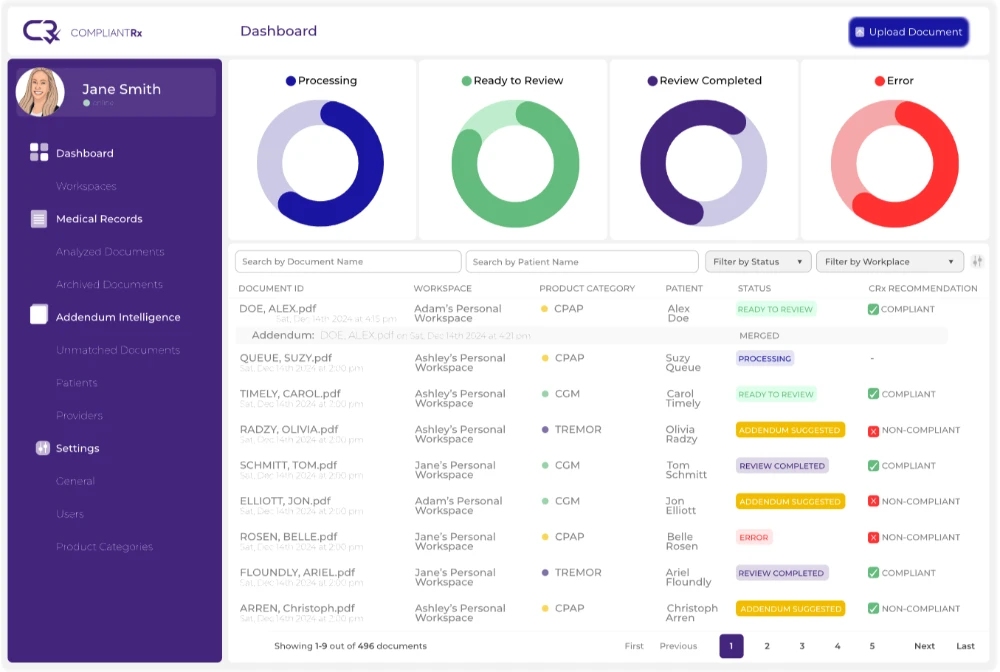
Integrating CompliantRx into your workflow provides several distinct advantages:
- Compliance Monitoring & Alerts: Flags missing documentation and coverage mismatches at intake, before submission.
- Addendum Intelligence™: When a coverage limit needs a medical-necessity exception, it helps generate the structured addendum request.
- Intelligent Data Extraction: Pulls patient and physician details from faxes and referrals, reducing manual entry errors.
- Bi-directional integration: Connects with systems of record like Brightree and NikoHealth without an IT overhaul.
Key Takeaways: Prevent CO-119 Denials with Proactive Compliance
The CO-119 denial code description signifies exhausted benefit limits, often stemming from frequency caps and missing documentation in DME billing. Tracking utilization and verifying payer requirements before submission are essential steps to prevent these financial write-offs.
CompliantRx flags documentation and coverage gaps at intake, before they turn into denials or write-offs. Schedule a demo to see how it fits your intake workflow.
FAQs
Review these common questions to better understand the CO-119 denial code description and its impact on your operations.
1. Can a patient ever be billed when a CO-119 denial is received?
No. The CO prefix means it is a contractual obligation, so the provider writes off the balance and cannot bill the patient. Check whether the patient has secondary coverage, and if you believe the denial was misapplied, appeal it rather than rebilling the patient.
2. Does this denial code apply to both rental and purchased DME?
Yes, it applies to both scenarios when frequency or financial caps are reached. Capped-rental timelines often trigger this denial if the supplier bills beyond the allowed rental period without proper modifiers.
3. How does a Reasonable Useful Lifetime limit trigger this code?
Payers enforce replacement schedules that dictate how long an item should last before a new one is covered. Submitting a claim for replacement equipment before the item’s useful lifetime has elapsed, a minimum of five years for most DME, can result in a denial.
4. What is the difference between CO-119 and CO-45?
CO-45 indicates that the charge exceeds the contracted fee schedule, resulting in a write-off. CO-119 specifically means the patient has exhausted their allowed frequency or benefit maximum for that specific timeframe.
5. How do Remark Codes help resolve these denials?
Remark Codes accompany the primary adjustment code to clarify exactly which limit was exceeded. They provide specific details about the frequency, duration, or dollar threshold so your team can pinpoint the coverage issue.
6. Can we appeal a CO-119 denial if we believe it was an error?
Yes, payers occasionally misapply limits, making appeals necessary when documentation supports medical necessity. You should review the remittance advice carefully and submit supporting documentation to prove the patient had remaining benefits.